Hydrocarbon vs Ethanol vs CO2: A GMP Decision Framework
The right extraction method for a GMP operation is the one that matches your target product line, your throughput needs, and the room classification your facility is prepared to build and maintain — not whichever method has the loudest reputation. Hydrocarbon extraction generally supports strong terpene retention for live-resin-style products but requires Class I Division 1 (C1D1) explosion-proof equipment and room classification. Ethanol centrifuge systems run fast, repeatable cycles at moderate temperatures. CO2 avoids flammable-solvent room classification at the cost of higher-pressure engineering. This guide breaks the decision down by the operational factors that actually change facility design and staffing, and links to our interactive tool for a side-by-side technical comparison.
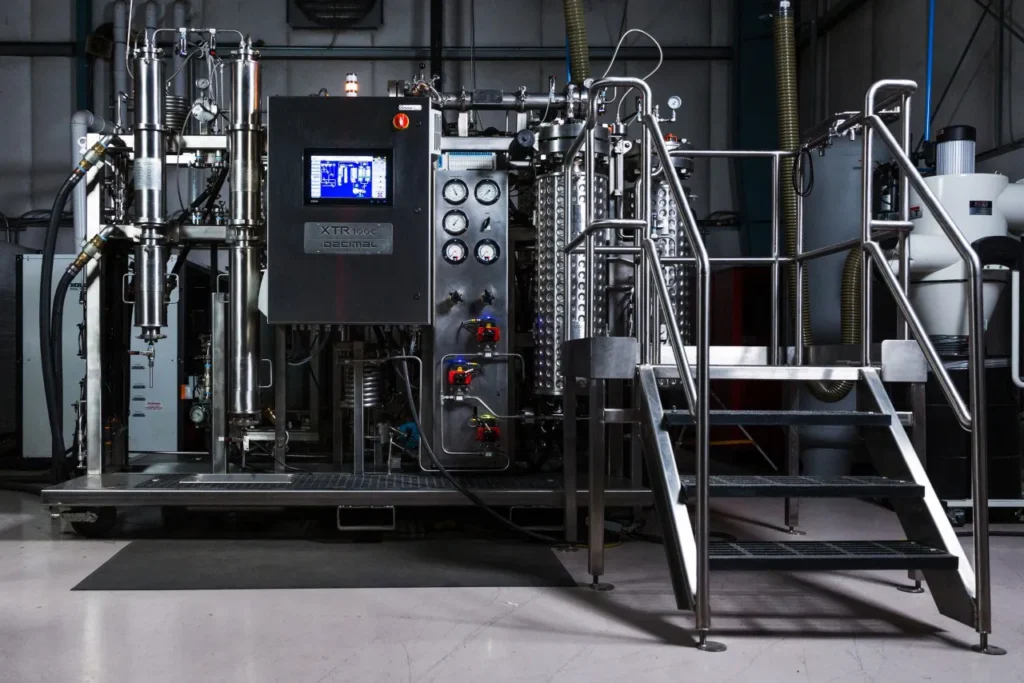
Start With Your Product Line
Before comparing machines, be clear about what you're making. Hydrocarbon extraction is the common choice behind live resin and terpene-forward concentrates. Ethanol centrifuge systems suit operations moving larger batch volumes toward distillate or isolate feedstock. CO2 extraction is often chosen where avoiding a flammable solvent's room-classification burden matters more than maximizing single-pass terpene retention.
The Operational Factors That Actually Decide It
- Safety classification and room requirements — hydrocarbon systems require C1D1-rated equipment and explosion-proof room design; ethanol and CO2 systems generally carry a lighter room-classification burden.
- Cycle time and throughput — how many runs you need per shift, and at what batch size, to hit your production target.
- Staffing and operator skill — solvent-handling and recovery procedures differ meaningfully from operating a high-pressure CO2 vessel.
- Facility infrastructure — explosion-proof electrical for hydrocarbon, high-pressure plumbing and vessel code compliance for CO2, chilling capacity for cold ethanol.
- Product and terpene profile targets — how much the extraction method itself matters to the finished product's character.
Hydrocarbon vs. ethanol vs. CO2, at a glance
| Factor | Hydrocarbon | Ethanol (centrifuge) | CO2 |
|---|---|---|---|
| Room classification | C1D1 explosion-proof required | Lighter solvent-handling requirements | No flammable-solvent classification; high-pressure vessel code applies |
| Representative cycle time | 2 cycles per hour (5.HX / 15.HX / 40.HX) | 15–20 minutes per cycle (20.EX / 40.EX) | Per-run batch processing (20.LE / 100.C) |
| Representative batch size | 5–40 lbs. per run across the HX line | Up to 20 lbs. (20.EX) or 40 lbs. (40.EX) per cycle | 6–9 lbs. (20.LE) to 16–20 lbs. (100.C) per run |
| Typical product focus | Live resin, terpene-forward concentrates | Higher-volume distillate/isolate feedstock | Extracts where avoiding flammable-solvent classification matters |
A Quick Decision Checklist
- Can your facility support C1D1 explosion-proof construction, or would that push the project timeline and scope too far?
- Is terpene retention for a live-resin-style product central to what you're selling, or is bulk distillate/isolate feedstock the priority?
- Do you have (or can you hire) staff experienced in solvent handling and recovery, versus high-pressure vessel operation?
- Does your target export market's regulatory framework favor one process over another for documentation or room-classification reasons?
Compare Methods Interactively
For a side-by-side visual comparison across performance and efficiency metrics, with a recommendation based on your stated priority and scale, use the interactive extraction method comparison tool. It's a good next step once you've narrowed the decision down using the operational factors above.
Common Mistakes and Quality Risks
- Choosing a method based on brand reputation rather than the room classification and staffing your facility can actually support.
- Underestimating the explosion-proof electrical and ventilation work a C1D1 hydrocarbon room requires before the first extraction ever runs.
- Sizing for a single machine's rated cycle time without accounting for winterization, filtration, and solvent recovery time downstream — see how to size equipment by throughput.
- Assuming CO2 avoids all facility complexity — high-pressure vessels bring their own code-compliance and maintenance requirements.
Topics covered
- hydrocarbon
- ethanol
- CO2
- comparison
- GMP cannabis equipment
You've just read the full guide above. Want a copy in your inbox to share with your team or keep for reference?